
Genicular Artery Embolization (GAE)

A Minimally Invasive Treatment for Knee Osteoarthritis
Knee osteoarthritis is one of the most common causes of chronic joint pain, affecting millions of people each year. As the protective cartilage in the knee gradually wears down, inflammation can develop in the surrounding tissues and blood vessels, leading to persistent pain, stiffness, and reduced mobility.
For many patients, early treatments such as physical therapy, medications, or injections may provide temporary relief. However, when symptoms continue to interfere with daily activities, individuals are often told that total knee replacement surgery may be the next step.
At California Joint Pain Institute, we offer Genicular Artery Embolization (GAE), a modern, minimally invasive treatment designed to help reduce knee pain associated with osteoarthritis. This procedure targets the source of inflammation within the knee joint and may help patients delay or avoid more invasive surgical procedures.
What Is Genicular Artery Embolization?
Genicular Artery Embolization (GAE) is a minimally invasive, image-guided procedure used to treat chronic knee pain caused by osteoarthritis.
In patients with osteoarthritis, inflammation within the knee joint can lead to the growth of small abnormal blood vessels around the joint. These vessels contribute to ongoing inflammation and pain.
GAE works by targeting and reducing blood flow through these inflamed vessels, which may help decrease inflammation and improve pain levels within the knee.
The procedure is performed using advanced imaging technology that allows physicians to precisely guide a small catheter to the blood vessels surrounding the knee joint.
Because the treatment focuses only on the specific vessels contributing to inflammation, the surrounding tissues and structures of the knee remain unaffected.
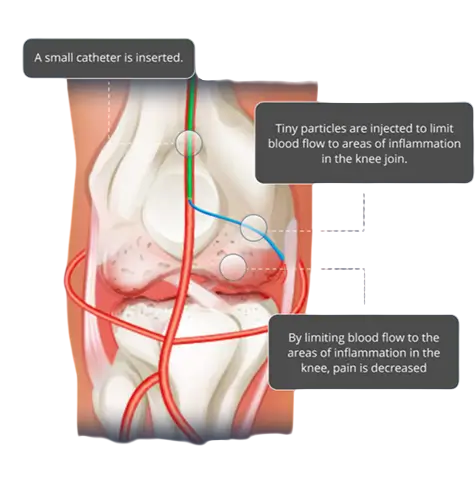
How the GAE Procedure Works
Genicular Artery Embolization is performed in an outpatient setting and typically does not require large incisions or surgical intervention.
During the procedure:
- A small catheter is inserted through a tiny entry point, usually in the upper leg.
- Using advanced imaging guidance, the physician navigates the catheter to the small genicular arteries that supply inflamed tissue around the knee.
- Tiny embolic particles are carefully delivered to reduce blood flow in these abnormal vessels.
- Once the targeted vessels are treated, the catheter is removed and the entry site is bandaged.
The entire process is designed to be precise and minimally disruptive to surrounding tissues.
Because the procedure does not involve major surgical incisions, many patients are able to return home the same day.
How GAE Helps Reduce Knee Pain
The primary goal of Genicular Artery Embolization is to reduce inflammation within the knee joint.
In osteoarthritis, the growth of abnormal blood vessels is often associated with inflammatory signals that contribute to chronic pain. By reducing blood flow through these vessels, GAE can help decrease inflammatory activity in the joint.
Many patients report improvements such as:
- Reduced knee pain during daily activities
- Improved mobility and joint function
- Greater comfort when walking or standing
- Reduced reliance on pain medications
Results can vary depending on the severity of osteoarthritis and the individual patient’s condition.
An Alternative to Knee Replacement Surgery
When knee osteoarthritis becomes severe, patients are often told that total knee replacement may be necessary. While knee replacement surgery can be effective for some individuals, it is a major surgical procedure that involves removing damaged joint surfaces and replacing them with artificial components.
Knee replacement surgery can involve:
- Hospital stays
- Significant recovery time
- Physical rehabilitation
- Potential surgical risks and complications
Because of these factors, many patients prefer to explore less invasive treatment options before considering joint replacement. However, GAE does not preclude one from having joint replacement.
Genicular Artery Embolization provides an alternative approach by addressing the inflammation associated with osteoarthritis without altering the structure of the knee joint.
This means patients may be able to manage their symptoms without undergoing major surgery.
For some individuals, GAE may help delay or avoid the need for knee replacement altogether.
Who May Be a Candidate for GAE?
Genicular Artery Embolization may be considered for individuals who:
- Have been diagnosed with knee osteoarthritis
- Experience persistent knee pain that interferes with daily activities
- Have not achieved sufficient relief from conservative treatments such as physical therapy or injections
- Want to explore minimally invasive alternatives to knee replacement surgery
- Have swelling and pain post-knee replacement
A consultation and imaging review are typically required to determine whether the procedure may be appropriate for a particular patient.
What to Expect After the Procedure
After Genicular Artery Embolization, patients typically spend a short period of time in recovery before returning home the same day.
Most individuals are able to resume light activities shortly after the procedure, though specific recommendations may vary depending on the patient’s condition.
Improvements in pain and mobility may occur gradually as inflammation within the knee decreases.
Follow-up appointments allow the physician to monitor progress and ensure the knee is responding well to treatment.

Learn More About Minimally Invasive Knee Pain Treatment
Living with knee osteoarthritis can make everyday movements challenging, but modern medical advancements are providing new options for managing chronic joint pain.
At California Joint Pain Institute, our team specializes in Genicular Artery Embolization (GAE) and other minimally invasive procedures designed to address inflammation associated with joint conditions. Contact California Joint Pain Institute in Irvine, CA to schedule a consultation and explore your options for minimally invasive knee osteoarthritis treatment.